The Curvy Denim Guide: Finding Jeans That Fit Waist AND Hips Without the Gap
The waist gap is the curvy denim experience in one image — the jeans that fit the hips and gape at the waist, or fit the waist and refuse the hips — and the fixes are structural: the curvy cuts, the stretch literacy, the ten-dollar tailor. The curvy denim guide.

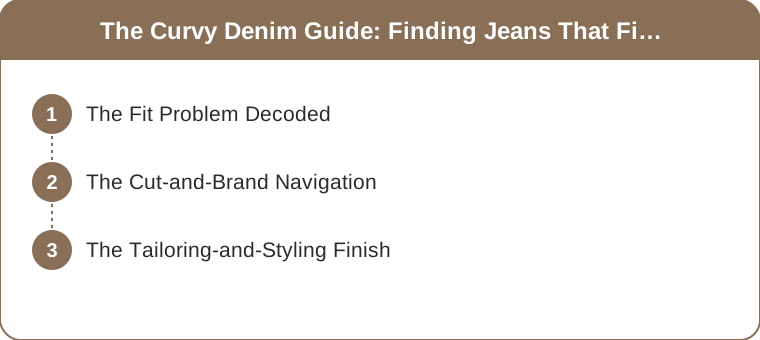
The Fit Problem Decoded
Why standard jeans fail curves: the ratio mathematics (the standard cuts drafted for a modest waist-hip difference — the curvier ratio exceeding the pattern; the gap being geometry, not your body per the body-neutral logic), the rise interaction (the low rises sliding and gaping worst — the high rise’s waist-anchoring advantage per the rise logic), the stretch double-edge (the elastane helping fit and surrendering with wear — the bagging-out afternoon; the recovery-quality being the spec that matters per the fabric logic), the size-up-and-swim trap (the hips accommodated by a size that fits nowhere else — the classic compromise that satisfies nothing), and the reframe (the jeans failing, not the body — the cut hunted, not the self blamed per the confidence logic).

The Cut-and-Brand Navigation
Shopping structurally: the curvy-cut category (the brands’ curvy lines drafting a bigger waist-hip differential INTO the pattern — the category being the single biggest fix; the curvy-fit search term used first per the shopping logic), the rise selection (the high rise as the gap-fighter — the waist held at its narrowest point; the contoured-waistband designs that curve rather than cut straight), the fabric literacy (the substantial stretch denim with recovery — the rigid-denim honesty: the beautiful-but-unforgiving option for the patient; the ponte-and-knit denim tier for comfort-first), the style range (the curvy cuts existing in straight, wide, flare and skinny — the silhouette chosen by taste per the style logic; the wide-leg’s curve-friendly drape from the wide-leg logic), the try-on protocol (the sit-squat-and-reach test — the gap check seated; the waistband honesty after ten minutes), and the review mining (the curve-similar reviewers from the review logic — the gap-mentions searched).
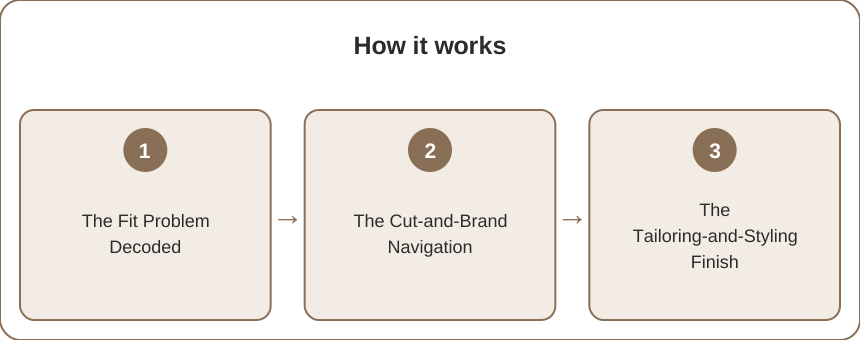
The Tailoring-and-Styling Finish
Completing the fit: the tailor’s waist-take-in (the gap solved for ten-fifteen dollars — the buy-for-hips-tailor-the-waist law being curvy denim’s golden rule per the alteration logic; the back-seam adjustment being routine work), the belt diplomacy (the belt managing minor gaps — the elastic-back styles; the belt as style, not just function per the belt logic), the styling formulas (the tucked-knit-and-high-rise showcase — the curve-celebrating fits from the curve logic; the untucked-length harmony), the hem calibration (the length-to-shoe matching from the tailoring logic — the curvy cuts hemmed like any investment), the wardrobe math (the two perfect pairs beating six compromises — the cost-per-wear on the tailored pair per the investment logic), and the closing frame (the waist gap ended by category, rise and a ten-dollar seam — the hips fitted, the waist anchored, the jeans finally neutral; the denim, solved structurally). Curvy cut, high rise, tailor the waist: the gap, closed for good.
The waist gap is geometry, not your body: standard patterns assume a modest waist-hip ratio. Fix it structurally — shop the curvy-cut category first (the differential is drafted in), choose high rises with contoured waistbands, demand stretch with recovery, and live by the golden rule: buy for the hips, tailor the waist for ten dollars.
Keep Reading
This article is for general styling and informational purposes only. Trends, sizing, availability and pricing may vary by brand and season.